
25K
Downloads
94
Episodes
2015 Chicago Marathon. Mile 13. I’m flying—feeling like I could run forever. Heart surgery, back surgery, barely able to stand a decade before, and here I am crushing it. Then I see the sign: NOT ALMOST THERE.
Everything changed. Heavy legs. Cramping. Mental breakdown. I barely finished what started as my best race ever.
That sign broke me, but it also built me. Southside Chicago kid who studied for 15 seconds between building cars on the assembly line. Graduated in 5 years. Built companies. Sold two. 800 employees. Young father at 20 who figured it out as I went.
I’ve spent 50+ episodes of Not Almost There interviewing experts, and now my cohost and I are diving deeper into the conversations that matter most. We dig into what it really takes—in business, branding, health, life. No fluff. Real talk about building something that matters while the clock’s ticking.
Whether you’re running your first mile or your hundredth company, we’re here to help you go the distance.
Because almost there isn’t good enough.
Episodes

Monday Aug 23, 2021
Monday Aug 23, 2021
RICH ROLL A graduate of Stanford University and Cornell Law School, Rich is a 50-year old, accomplished vegan ultra-endurance athlete and former entertainment attorney turned full-time wellness & plant-based nutrition advocate, popular public speaker, husband, father of 4, and inspiration to people worldwide as a transformative example of courageous and healthy living. In 2012, Rich became a #1 bestselling author with the publication of his inspirational memoir Finding Ultra: Rejecting Middle Age, Becoming One of the World’s Fittest Men, and Discovering Myself. Taking up where the book leaves off, in 2013 Rich launched the wildly popular Rich Roll Podcast, which persistently sits atop the iTunes top-10 lists. In 2014, Rich & his wife Julie Piatt published the bestselling cookbook and lifestyle primer, The Plantpower Way: Whole Food Plant-Based Recipes And Guidance For The Whole Family.
IN THIS EPISODE… Joe sits down in person with the inspirational wellness advocate, best-selling author, and podcast host Rich Roll. Rich tells Joe about his crippling addiction to alcohol and how he was able to finally admit he had a problem and seek help. He talks about his relapse 13 years into sobriety, which only lasted one day, and what he learned from that experience. Rich also explains how one scary moment going up the stairs at age 39 triggered his quest to find a healthier, plant-based lifestyle. They wrap up their in-depth conversation with a look at how Rich was able to start his podcast during a time with limited resources and technology and turn it into a top-ranking, healthy lifestyle in areas of fitness, mindset, and nutrition for his listeners.
Breakdown with Rich Roll:
Chapter 1 (0:00) Intro
Joe introduced Rich Roll
Chapter 2 (2:00) Pre-podcast journey
The catalyst that started the podcast was Rich’s life experiences which included his relationship with alcohol and how he was able to restart his life after a low point in his life.
Chapter 3 (7:26) Law trajectory
Rich did not extend his law license. He explains why he decided not to continue on the path of being a lawyer.
Chapter 4 (12:40) Seeing help
Suffering from alcoholism for a long time, Rich finally decided to get treatment. He explains addiction and how to try to identify when you or someone you love can identify the problem.
Chapter 5 (17:56) A moment of prayer
While going through the 12 steps of AA, Rich found himself on a beach having a moment where he could let go of his past, and hardships and start on a new path.
Chapter 6 (29:50) Health scare and a change
Rich found himself in a scary moment climbing the stairs and fighting for breath at the age of 39; although he kicked the alcohol addiction, he was not healthy, so clean living starts
Chapter 7 (40:04) Giving up dairy is tough
The hardest part of becoming vegan was giving up on cheese. Dairy is the biggest food most people say they can’t live without, but once Rich gave it up, it made the biggest difference
Chapter 8 (49:52) Endurance Running
Once Rich had given up on alcohol and had the moment of clarity he needed to make a change in his diet, he had a flow moment on a run and found his athletic stride
Chapter 9 (58:56) Finding ultra
Rich began starting to look for ultra runs to try to push himself to find his peak performance. He ended up finding a double ultra race and began laser focus on qualifying.
Chapter 10 (1:05:45) Magic in Hawaii
Finding a relationship with Hawaii Rich was able to tap into a sense of encouragement. You have to ask for permission from the island, you can feel the power.
Chapter 11 (1:20:34) Doing it without a net
Rich started his podcast with no intentions of money or where it would lead him, but in a pure way of wanting to learn and provide education to his audience.
Chapter 12 (1:38:02) Wrap Up
Joe wraps up the episode and shares his takeaways
Material Referenced in this interview:
→https://www.richroll.com/
→https://www.richroll.com/all-episodes/
→https://www.richroll.com/books/
📞 Connecting with Rich Roll:
→https://twitter.com/richroll
→https://www.facebook.com/richrollfans
→https://www.instagram.com/richroll/
👊 To learn more about Not Almost There by visiting this link
→ Not Almost There http://notalmostthere.com/
Connect with Joe on social here:
→Instagram https://www.instagram.com/joe_chura/
→Facebook https://www.facebook.com/notalmostthere/
→Twitter http://twitter.com/joechura

Sunday Aug 15, 2021
Sunday Aug 15, 2021
JORDAN BURROUGHS Olympic Gold Medalist, 4x World Champion, 2x Olympian, Husband, Dad. Jordan is an American freestyle wrestler and graduated folkstyle wrestler who competes at 74 kilograms. In freestyle, he is the 2012 Olympic Gold medalist, a four-time World Champion (seven-time medalist), three-time Pan American Games Gold medalist, four-time Pan American champion, and four-time US Open National Champion, making the US World or Olympic Team on nine occasions. In folkstyle, Burroughs was a two–time NCAA Division I champion for the Nebraska Cornhuskers and was awarded the Dan Hodge Trophy (equivalent to the Heisman Trophy) in 2012. Burroughs is widely known for his double leg takedown and is considered one of the greatest freestyle wrestlers of all time. Burroughs’ goal is to become the winningest wrestler in American history. John Smith, the American leader, stands in first place with six total titles. In order to do surpass him, he would have to win two more world championships in addition to the five he already has. He has his sights set on another gold at the 2024 Olympic Games in Paris. Dream it. Do it.
IN THIS EPISODE...Jordan and Joe dig into his background and Jordan’s rise in the wrestling world. You will find his work ethic goes hand in hand with our Not Almost There family, and I know you will be blown away by his tenacity and outlook on constantly striving to be the best he can be. Jordan talked about his wins and losses and the lessons he learned in both, how important family is to him and how he is able to make his family a part of his work life. Jordan also ends the episode by sharing what’s next for him after wrestling.
Breakdown with Jordan Burroughs:
Chapter 1 (0:00) Intro
Joe introduces Jordan Burroughs
Chapter 2 (1:00) Campers versus climber
Tim Grover gives a great analogy Jordan lives by about campers and climbers. Jordan shares what that means to him and how he lives his life by that philosophy
Chapter 3 (4:08) The beginning of his wrestling journey
Wrestling wasn’t something Jordan always wanted to do, he started relatively late but soon realized with his work ethic and passion he was able to succeed
Chapter 4 (11:39) How much work you put in
Jordan strives to be the hardest worker in the room. He has never taken a shortcut or cheated.
Chapter 5 (13:31) Experiences Jordan learned from the most
Jordan shares his most memorable win and loss, and what he was able to learn from both experiences
Chapter 6 (18:53) Becoming an olympian
Becoming an olympian didn’t happen overnight, but the change that occurs when winning the gold does change you just that fast
Chapter 7 (24:30) Lessons from defeat
There is so much you can learn after a hard loss. Looking back and taking away those lessons to bring with you helps to continue to grind and become the best
Chapter 8 (42:13) The daily routine
Jordan shares what a day looks like and how he balances working out and staying focused on his career while still being present with his family
Chapter 9 (1:17:12) Spirituality and food are both fuel
Spirituality has been a great guide for Jordan. He has a great mindset and keeps himself focused and has no time for trouble. He is also is a well-known foodie with the best recommendations
Chapter 10 (50:12) Wrapping up
Jordan shares what’s next, and Joe wraps up the episode and shares his takeaways
Material Referenced in this interview:
→GO. Event
→Athletic Brewing
→Winning by Tim Grover
→Relentless by Tim Grover
→Headspace App
📞 Connecting with Jordan Burroughs:
→https://www.facebook.com/jordanburroughswrestling
→https://www.instagram.com/alliseeisgold/
→https://twitter.com/alliseeisgold
→https://www.jordanburroughs.com/
👊 To learn more about Not Almost There by visiting this link
→ Not Almost There http://notalmostthere.com/
Connect with Joe on social here:
→Instagram https://www.instagram.com/joe_chura/
→Facebook https://www.facebook.com/notalmostthere/
→Twitter http://twitter.com/joechura
Sunday Aug 08, 2021
Sunday Aug 08, 2021
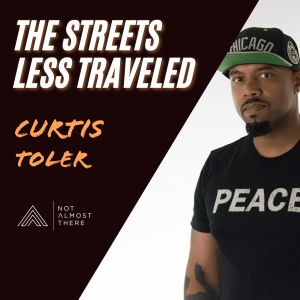
CURTIS TOLER is a Chicago native and former leader of one of the city’s most notorious street gangs, Curtis serves as Director of Outreach for Chicago Cred. He is committed to impacting the culture of violence in Chicago by linking at-risk young men with chances to reset their lives through job training and permanent employment opportunities. Before joining CRED, Curtis was a gang intervention specialist and a spokesman for the peacemakers at the Faith Community of St. Sabastian’s Church. A member of the Community Justice Task Force and a Chicago Gang Historian, Curtis has received recognition from the State of Illinois Senate for his leadership efforts to bring peace to the streets, his commitment to improving the quality of life in the communities as well as for his commitment to advocating for positive changes to reduce violence in our neighborhoods. Curtis has been seen on HBO’s The CHI and The Daily Show with Trevor Noah as well as a contributor to Amanda Ripley’s book, High Conflict.
IN THIS EPISODE...Curtis shares his story with Joe; he came up in a high violent, high crime neighborhood. He was also the son of a prominent gang member. Curtis explains how he became involved with gang life and eventually moved up through the ranks to become a leader. He also shares how he decided to make a change, get out of the violence, and become an advocate for change within the inner city of Chicago, where most children and young adults are not given an opportunity at a life outside of crime and violence.
Breakdown with Curtis Toler:
Chapter 1 (0:00) Intro
Joe introduces Curtis Toler
Chapter 2 (2:40) Curtis’ start
Curtis talks about his upbringing from when he was a child in the inner city of Chicago
Chapter 3 (12:53) Getting into the gang life
From being jumped into a gang at age 11, to what gang life was like including getting incarcerated
Chapter 4 (28:49) Series of horrible events
After finding his mother murdered, Curtis hit a low point and was violet. Meanwhile, he was moving up the ranks within his gang
Chapter 5 (47:26) Deciding to Leave the Gang
The birth of his son left Curtis feeling the need to leave the gang and street life behind. He wasn’t able to quickly leave and had a series of setbacks
Chapter 6 (58:52) Starting Chicago CRED
Starting a program focused on helping young people who are involved in gangs or criminal activity and giving them opportunities they weren’t given before
Chapter 7 (1:02:30) Social media plays a part in gang conflict
Social media is now having an impact on street violence. When someone makes disrespectful comments online it can incite violence IRL
Chapter 8 (1:14:16) Programs starting in pre-school
Starting early intervention is key to letting kids know there is a different path for them
Chapter 9 (1:17:12) How to help
First is prayer, and second is if you care then you are there. You can mentor, tutor, financially or reach out to your local government
Chapter 10 (1:24:25) Wrapping up
Joe wraps up the episode and shares his takeaways
Material Referenced in this interview:
→https://www.chicagocred.org/
→https://www.amazon.com/High-Conflict-Why-Get-Trapped/dp/1982128569
→The Daily Show ft Curtis Toler
📞 Connecting with Curtis Toler:
→https://www.facebook.com/curtis.a.toler
→https://www.instagram.com/curtistoler/
→https://twitter.com/thecurtistoler
👊 To learn more about Not Almost There by visiting this link
→ Not Almost There http://notalmostthere.com/
Connect with Joe on social here:
→Instagram https://www.instagram.com/joe_chura/
→Facebook https://www.facebook.com/notalmostthere/
→Twitter http://twitter.com/joechura
Sunday Aug 01, 2021
Sunday Aug 01, 2021
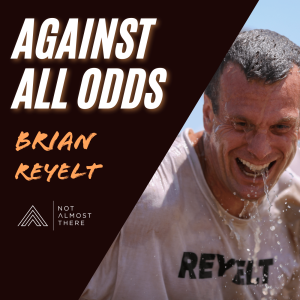
Brian Reyelt is an award-winning executive chef and restauranteur for over 20 years. Brian graduated magnum cum laude from Johnson & Wales Culinary University where he studied the business side as well as the cooking side of the food world. He was invited to cook at the James Beard House, and has successfully opened several restaurants, with his first restaurant opening before he was 30 years old. Most impressively, Brian overcame his toxic relationship with alcohol. He went through years where he went down a slippery slope until he found himself in a situation that demanded change. Now he is over 4 years sober and is focusing his efforts on his mental health as well as physical health. He has run 4 marathons, swam the Long Island Sound, and most recently completed an incredible feat of finishing Kokoro Camp, a 50+ hour crucible training which mimics BUDS navy seal training’s hell week, run by Retired Navy Seal Commander Mark Divine's SealFit.
→IN THIS EPISODE…Joe and Brian discuss Brian’s battle and triumph over alcohol. Joe has known Brian for almost 2 years now, and what is most impressive is that Brian had the courage to admit things were out of control, he had the courage to seek treatment, and today he has the courage to share his story with you.
🔍 Breakdown with Brian Reyelt:
Chapter 1 (0:00) Intro
Joe introduces Brian Reyelt and sets the story
Chapter 2 (2:21) Rock BottomBrian shares the painful story of his lowest moment struggling with alcohol
Chapter 3 (6:00) Finding help
Miraculously Brian had a friend at the hospital that helped get him to the right place, and he shares what got him here
Chapter 4 (38:49) Continuing that help
After getting out of rehab, Brian continued his recovery in a halfway house which helped his transition to return to his life
Chapter 5 (47:09) Dealing with unhappiness
Finally achieving sobriety, Brian was still struggling with unhappiness. His wife helped him find a new direction
Chapter 6 (53:50) Finding salvation in the physical
Brian began focusing on his help and physical fitness. He has worked with Mark Divine and the Navy Seal Fit team, including an almost impossible feat of completing Kokora
Chapter 7 (1:12:45) Next Adventures
Brian is focused on the future and continuing to improve and help others
Chapter 8 (30:47) Wrap Up
Joe wraps up the episode with Bran
Material Referenced in this interview:
→https://unbeatablemind.com/
→https://sealfit.com/
→https://sealfit.com/KOKORO/
📞 If you or someone you love is struggling:
→https://www.aa.org/
→https://www.na.org/
→https://al-anon.org/
→https://www.niafg.org/
👊 To learn more about Not Almost There by visiting this link
→ Not Almost There http://notalmostthere.com/
Connect with Joe on social here:
→Instagram https://www.instagram.com/joe_chura/
→Facebook https://www.facebook.com/notalmostthere/
→Twitter http://twitter.com/joechura

Monday Jul 26, 2021
Monday Jul 26, 2021
⛳️ Christina Lecuyer is a former Professional Golfer, a three-time reality television competitor, Confidence + Mindset Coach, and Founder of Women with C.L.A.S.S. Mastermind, as well as Decide It’s Your Turn™. As a former professional golfer and host, Christina has helped raise millions of dollars for charity and used her skills as a human connection specialist to facilitate business relationships via the golf course. Her clients include Forbes list CEOs, Wall Street executives, and numerous global charities. Christina’s mission in life is to empower people to fully live in their purpose, confidently and successfully.
→IN THIS EPISODE…Joe and Christina bond over a shared experience, and dive into their mutual interest around confidence. They have an important discussion about confidence versus cockiness. Christina talks about balancing the two and each is important. Her insights on confidence and taking your life to the next level are spot on. Christina and Joe agree: the difference between the person making it and the one struggling is the person making it didn’t have self-doubt or negativity blocking their way. It wasn’t their credential or pedigree, it was their grit and determination.
🔍 Breakdown with Christina Lecuyer:
Chapter 1 (0:00) Intro
Joe introduces Christina Lecuyer, former Professional Golfer and confidence and mindset coach
Chapter 2 (2:19) A shared experience
Interestingly enough, Joe and Christina are in a small club of individuals who competed in this experience
Chapter 3 (6:34) Handling stress under pressure
Meditation is so important to handle stress. Make sure to take deep breaths and center yourself as much as possible
Chapter 4 (15:14) Golf Channel’s Big Break Experience
Christina was a 3x golf channel reality show contestant, and the first one was The Big Break. She shares her experience.\
Chapter 5 (18:23) The balance between confidence and arrogance
Confidence deals with self-assurance or certainty about something. There is nothing bad about being sure about yourself or what you are doing
Chapter 6 (21:46) From Pro Golf to Confidence Coach
Christina had some struggles when she was coming up in the golfing world. She had external validation, but it wasn’t coming from within. Her experiences led her to want to help others
Chapter 7 (29:15) How to implement what you learn
Taking action on what you want is so important. You need to take what you learn and make a plan on how to do it
Chapter 8 (31:48) Hurdles people face with confidence
Stop worrying about what other people think. Don’t ever quit, that is the most important thing to remember. When quitting is not an option, everything else is
Chapter 9 (39:01) Confidence coaching, what we do first
The very first thing Christina does with a new client is to answer where they are at, and what their biggest weaknesses are, and how series are you from a 1-10. Mindset is so important
Chapter 10 (48:05) How confidence relates to success
Confidence and success go hand in hand. It is imperative to believe in yourself and push yourself in order to be successful in your life
Chapter 11 (51:27) Life lesson from Alice Cooper
Christina was on a pro-am golf experience many years ago and was able to golf with Alice Cooper. She witnessed him do something that was a life lesson she never forgot
Chapter 12 (55:41) Wrap Up
Joe concludes the episode and shares his takeaways
Material Referenced in this interview:
→The Gifts of Imperfection
→The Big Break: Ka'anapali
→The One Thing by Jay Papasan
→Decide it’s your turn: The Podcast
📞 Connect with Christina Lecuyer
→https://www.instagram.com/bechristina/
→https://www.linkedin.com/in/christina-lecuyer-54862b142/
→https://www.facebook.com/christina.l.salter.3
→https://christinalecuyer.com/
👊 To learn more about Not Almost There by visiting this link
→ Not Almost There http://notalmostthere.com/
Connect with Joe on social here:
→Instagram https://www.instagram.com/joe_chura/
→Facebook https://www.facebook.com/notalmostthere/
→Twitter http://twitter.com/joechura

Sunday Jul 18, 2021
Sunday Jul 18, 2021
🤼♂️ AMANDA RIPLEY is a New York Times bestselling author and an investigative journalist for The Atlantic and other magazines. Her books include High Conflict: Why We Get Trapped and How We Get Out, The Smartest Kids in the World: And How They Got That Way, and The Unthinkable: Who Survives When Disaster Strikes—and Why. Ripley spent a decade writing about human behavior for Time magazine in New York, Washington, and Paris. Her stories helped Time win two National Magazine Awards.
→IN THIS EPISODE…Joe and Amanda discuss conflict; the different types, which conflict is good and which is bad. Amanda shares some incredible stories from the road while interviewing people who experienced high conflict in different ways from a gang member to a scholar of conflict who found himself in the same conflict he himself talks about how to avoid.
🔍 Breakdown with Amanda Ripley:
Chapter 1 (0:00) Intro
Joe introduces Amanda Ripley, New York Times bestselling author
Chapter 2 (2:51) Types of conflict
There are several different types of conflict, and not all of them are bad. Amanda explains the good kind of conflict and the bad conflict which is high conflict
Chapter 3 (8:59) How do you identify when you are in high conflict
Amanda includes a checklist in the back of her book to help identify, which she shares. Also, Amanda gives actionable tips on how to get out of it.
Chapter 4 (11:58) The Gary Freeman story
Gary Freeman is an attorney who is a conflict expert. He has been a guest lecturer at Harvard and Standford, so when his neighbors asked him to run for office in his little town he would be able to handle it, but things went very wrong. Amanda shares the story.
Chapter 5 (19:06) Tips from a gang member
Amanda worked with a gang member from Chicago which embodies the ultimate form of high conflict. He shares his story and his journey.
Chapter 6 (28:02) Changes in congress
Amanda talks about her views on congress and steps they need to take in order to get our limiting two-party system to a place of listening and out of humiliation
Chapter 7 (33:35) Company acquisition
Joe’s company was acquired and he reflects back with Amanda about the experience, and what someone can do to help ease the merging of two companies or teams.
Chapter 8 (36:47) Constructive criticism
Start with really active listening. Prove with your responses back that you have really heard them.
Chapter 9 (42:57) What would be an additional chapter
After the book was published, Amanda has heard so many great stories from people after they have read the book. One idea she would add would be about good conflict, and how it is transcendent.
Chapter 10 (50:18) Wrap Up
Joe concludes the episode and invites Amanda to come back to talk about Smartest Kids on Earth.
Material Referenced in this interview:
→High Conflict
→The Unthinkable
→The Smartest Kids in the World
📞 Connect with Amanda Ripley
→https://www.linkedin.com/in/amanda-ripley-50a22112/
→https://www.instagram.com/ripleywriter/
→https://www.facebook.com/amanda.ripley.35
→https://www.amandaripley.com/
👊 To learn more about Not Almost There by visiting this link
→ Not Almost There http://notalmostthere.com/
Connect with Joe on social here:
→Instagram https://www.instagram.com/joe_chura/
→Facebook https://www.facebook.com/notalmostthere/
→Twitter http://twitter.com/joechura

Wednesday Jul 14, 2021
Wednesday Jul 14, 2021
🏃♂️ RUSS RAUSCH is the Founder of Vision Pursue or VP. VP helps individuals and organizations create a Performance Mindset through their training and mobile app. Before founding Vision Pursue. Russ has worked with countless athletes in the NFL, NBA, PGA, and the Olympics. These are top athletes with an incredible amount of stress and pressure. Russ was the COO at the hedge fund Emil van Essen. Before that he was part of the executive team that took the trading software firm, Trading Technologies, Inc. (TT), from a 20-person startup to a 650-person global company as CFO, CIO, and EVP of Global Buyside Sales. Russ lives in Chicago.
→IN THIS EPISODE…Russ and Joe talk about key tips to change up your competitive mindset by expecting the unexpected, controlling the controllable, and a game-changing acronym that will have you “see-ing” each situation differently. Russ explains how to take inspiration and turn it into action, and some tools/apps to use to help along the way.
🔍 Breakdown with Russ Rausch:
Chapter 1 (0:00) Intro
Joe introduces Russ Rausch, founder of Vision Pursue
Chapter 2 (1:51) Pivotal starting moment
Being in a job that didn’t inspire Russ was weighing on him. He shares his story of how he left his corporate job and started Vision Pursue
Chapter 3 (4:59) Impactful content
Russ shares what has inspired him, and how he was able to change his mindset.
Chapter 4 (9:58) Surrounding and the power of S.E.E
SEE doesn’t stop your emotions. However, the three steps should calm your emotions or at least allow you to access your thinking mind to make better decisions.
Chapter 5 (17:06) Performing at a high level
Performing at your highest level can be wearing. Russ explains how to combat that exhaustion
Chapter 6 (22:02) Preparation
Preparing for your day/goal is a big way of combating stress and anxiety. Russ explains the best practices of preparation
Chapter 7 (23:35) Visualization
Visualizing outcomes is a technique used by many athletes, most notably by Michael Phelps. Joe shares a story about how Phelps was able to set a record even when something goes wrong in the water.
Chapter 8 (30:47) Not Almost There, just starting
The story of how Not Almost There Started and how just starting a plan or a project and not over thinking can be a great practice.
Chapter 9 (35:57) Meditation
Mediation is an excellent school to center your thoughts and have a clear mind to take on the day.
Chapter 10 (38:18) New tools to use
Russ shares tools/apps to use to help with your mindset journey
Chapter 11 (49:49) Upward Social Comparison
A problem we face is comparing ourselves to others. It is all over social media, and hard to avoid, but it is so important to focus on you and your family and not comparing to what others have.
Chapter 12 (1:01:09) Wrap Up
Joe wraps up the episode and shares his key takeaway.
Material Referenced in this interview:
→The Master Key System by Charles F. Haanel
→https://www.visionpursue.com/
→
📞 Connect with Russ Rausch
→https://www.linkedin.com/in/russ-rausch-7358a12/
→https://www.instagram.com/russrausch/
→https://www.facebook.com/russ.rausch
→https://www.visionpursue.com/contact-2/
👊 To learn more about Not Almost There by visiting this link
→ Not Almost There http://notalmostthere.com/
Connect with Joe on social here:
→Instagram https://www.instagram.com/joe_chura/
→Facebook https://www.facebook.com/notalmostthere/
→Twitter http://twitter.com/joechura

Wednesday Jul 07, 2021
Wednesday Jul 07, 2021
🏃♂️ Dr. Noel Brick is a professor, ultra runner, and most recently a published author. Co-authored with Scott Douglas, The Genius of Athletes focuses on successful athletes who have a toolkit of mental strategies that help them to perform at their best. The book expounds on how, once learned, these techniques can be adapted to overcome challenges in everyday life. Currently, Noel is working on his second book and is a lecturer in Sport and Exercise Psychology at Ulster University. He completed an undergraduate degree in Sport and Exercise Science at the University of Limerick in 1997, an MSc in Sport and Exercise at Ulster University in 2003, and an MSc in Applied Sport and Exercise Psychology at Staffordshire University in 2017. In 2016 he completed a Ph.D. at the University of Limerick. Alongside his academic and research activities, Noel is also a long-distance runner and has completed more than 30 marathons and ultra-marathons including the Marathon des Sables in 2012 and the Irish 24-hour Championships in 2013.
→IN THIS EPISODE…Joe talks to Noel about his incredible book, The Genius of Athletes. We start the episode strong with Hoe asking Noel why learning to think like an athlete is so important, and the conversation just explodes from there. Noel provides tips for not just the athletes in the audience, but for everyone looking to help win in their everyday lives with goal setting, confidence building, and controlling stress levels.
🔍 Breakdown with Noel Brick Ph.D.:
Chapter 1 (0:00) Intro
Joe introduces Noel Brick, author of The Genius of Athletes
Chapter 2 (1:12) The importance of thinking like an athlete
There is so much that happens in sport from emotions to pressure/stress. These themes can mirror in our lives
Chapter 3 (3:38) Getting into the psychology of athletics
Noel is a lecturer in sport psychology, research is his hobby. He is an ultra runner and athlete himself, and his experience and studies have brought him to interesting discoveries
Chapter 4 (12:23) Kikkan Randall mindset
Kikkan Randall is an Olympic athlete that was diagnosed with breast cancer. She is a great example of putting voice to her emotions in a healthy way is a great strategy.
Chapter 5 (20:38) Emotion regulation and expression
Emotions have such a high impact on your daily plans. It is important to implement strategies to mitigate the effect high emotion can have.
Chapter 6 (28:32) Journaling and other strategies
Planning time to worry and allowing yourself time for feelings of stress and anxiety helps to limit the control said emotions have over you. It also minimizes the moments of surprise panic, because you allowed time for those feelings.
Chapter 7 (39:12) Pre-event rituals
Noel shares some of his most effective pre-event rituals, and how you can get yourself in the right headspace before an important day.
Chapter 8 (45:22) What you can control
The theory of threat state is an idea about how you can view a situation. Noel goes into the psychology of threat and control.
Chapter 9 (48:29) Be your own coach
It is important to self-analyze and give yourself tips and strategies to be better. Set your own goals. No one should be more invested in your success than you!
Chapter 10 (52:56) 5-4-3-2-1 Method
This is a grounding method that Noel advocates for to help bring you back to the present moment.
Chapter 11 (55:37) Failure to achieve
Failing to get started can be a number one reason for failure when people set goals for themselves.
Chapter 12 (58:22) Putting thoughts to action
Having a plan to not allow your thoughts to be stagnant and not come to fruition. It is important that you put your thoughts to action.
Chapter 13 (1:05:03) Off days
You can’t allow your off days to derail your training/ambition. Everyone has off days, Noel gives examples of who to minimize your off day and how to keep your momentum going.
Chapter 14 (1:11:22) Creating new habits
Great tips on starting new habits in your everyday life. This doesn’t have to be just for your athletic goals, but for your daily goals as well.
Chapter 15 (1:28:03) Ending
Joe thanks Noel for being a part of the show, and wraps up the interview
Material Referenced in this interview:
→The Genius of Athletes
→World Class: The Making of the U.S. Women's Cross-Country Ski Team (Kikkan Randall)
📞 Connect with Noel Brick
→https://twitter.com/noelbrickie
→https://www.facebook.com/noel.brick
→https://noelbrick.com/contact-me
👊 To learn more about Not Almost There by visiting this link
→ Not Almost There http://notalmostthere.com/
Connect with Joe on social here:
→Instagram https://www.instagram.com/joe_chura/
→Facebook https://www.facebook.com/notalmostthere/
→Twitter http://twitter.com/joechura

Monday Jun 28, 2021
Monday Jun 28, 2021
🥬Melissa Hanson is a health and nutrition coach and social media influencer. She has been able to help over 5,000 people ditch their poor eating habits and live healthier lifestyles. Melissa started her career as a massage therapist and planning retreats focused on mindfulness and healthy eating for small groups. Melissa quickly realized she could reach the masses through her inspiring Instagram and posting her health coaching tips on social platforms so people from all over the world can tune in and feel like part of her community. Melissa not only talks about the importance of healthy eating, but she also lives it herself with a completely plant-based, unprocessed diet.
→IN THIS EPISODE…Melissa talks to Joe about overall nutrition and health goals and what pitfalls to avoid. They get into what gut health is, and why it has so many repercussions on your overall wellness. Melissa also talks about the importance of a plant-based diet, which doesn’t have to be completely meat-free, but rather plant-strong. Melissa has a great way of simplifying what is most important when it comes to what you should be putting into your body and gives some amazing quick go to’s to have in your pantry/refrigerator for those days you need quick meals, and how surrounding yourself with positive accountability partners is key to your success.
🔍 Breakdown with Melissa Hanson:
Chapter 1 (0:00) Introduction
Joe introduces Melissa Hanson
Chapter 2 (1:21) How Melissa got started
Melissa started her health nutrition journey out of college after she started learning about how food affects health so significantly.
Chapter 3 (5:17) Alkaline, what it is and why it’s important
Processed foods are acidic and can cause an imbalance in your body. Eating living food, fruits, and vegetables, is alkaline and brings a healthy balance.
Chapter 4 (9:38) Food advice
Gotos and easy advice to help make good choices, especially when you are on the go. Keep it simple. Also how to navigate the grocery store
Chapter 5 (15:47) Glyphosate - What it is, and how to handle it, and what foods to avoid
Glyphosate is a broad-spectrum herbicide sold under the common trade name Roundup.
Chapter 6 (18:30) Schedule your day
Do in advance what you know in advance. Also best tips on how to start your day to set yourself up for success.
Chapter 7 (19:47) Tips for success
Melissa shares the top tips she has seen that results in success when trying to switch to a nutrition-dense lifestyle.
Chapter 8 (24:39) Fasting advice
When you are fasting you burn all the bad cells first, but you go through detox first.
Chapter 9 (26:05) Working on a calorie deficit
You don’t have to count calories. You will achieve a deficit with a plant-strong diet, and leaving out the processed foods.
Chapter 10 (28:45) Wholistic physician
Natural path doctors are able to do a lot of tests that traditional doctors don’t do. One, in particular, is glyphosate, which is a direct cancer-causing agent.
Chapter 11 (34:27) Accountability partners
Make sure you are surrounding yourself with like-minded and supportive individuals. Take baby steps together and you will notice a difference in only 30 days.
Chapter 12 (42:53) Harmful diseases directly linked to diet
Don’t wait until a health scare to make a change. Heart disease and cancer are just two of many scary health risks that are a direct result of what they are eating.
Chapter 13 (53:07) Tools and Apps
Some tools that can help you on your journey including some beneficial apps, tools, and stress management ideals.
Chapter 14 (59:33) Keep it simple
There are some simple steps and actions you can take to help simplify your health journey. These easy steps include getting good sleep
Chapter 15 (1:06:00) Joe Wraps up the episode
Joe thanks Melissa for being on the episode and share his key takeaways
Material Referenced in this interview:
→ https://gamechangersmovie.com/
→ https://www.rebootwithjoe.com/joes-films/
→ https://www.forksoverknives.com/
→ https://www.imperfectfoods.com/
📞 Connect with Melissa Hanson
→https://www.instagram.com/melissa_hanson/
→https://www.hansonskitchen.com/
→https://www.youtube.com/c/hansonskitchen
→https://www.pinterest.com/hansonskitchen/
👊 To learn more about Not Almost There by visiting this link
→ Not Almost There http://notalmostthere.com/
Connect with Joe on social here:
→Instagram https://www.instagram.com/joe_chura/
→Facebook https://www.facebook.com/notalmostthere/
→Twitter http://twitter.com/joechura
Tuesday Jun 22, 2021
Tuesday Jun 22, 2021
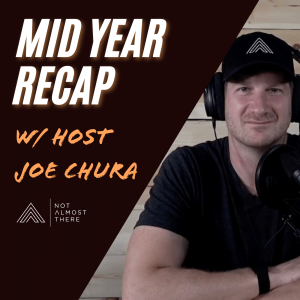
🎧 Joe Chura is an entrepreneur, inventor, and investor philanthropist. He founded and bootstrapped two companies, Launch Digital Marketing and Dealer Inspire, which both became two of the fastest-growing companies in America, earning the #39 spot on the Inc. 500 and #5 ranking on Crain’s Chicago Fast 50. In 2018, Joe sold both businesses to Cars.com in Chicago’s largest acquisition of the year, and he continues to lead their growth and innovation today as CEO. Joe’s passion is using his leadership and health and fitness experiences to help others achieve their goals, including starting an event REFUEL in December 2017, the Not Almost There Podcast in January 2021, and another event GO which will be held in August of 2021.
→IN THIS EPISODE… Joe looks back over the last 25 episodes and reflects on what led him to begin this podcast, as well as what he has learned along the way. After having conversations with 25 interesting, authentic people, Joe shares his favorite take-aways and how he has used some of their tips in his own personal development.
🔍 Breakdown with Joe Chura:
Chapter 1 (0:00) Joe Introduces the episode
Joe explains how he started the podcast, and talks about an event GO. he is hosting in August.
Chapter 2 (2:10) Chadd Wright
Chadd explains what it takes to become a winner and one of the main things is not to give pain a voice.
Chapter 3 (15:20) Jesse Itzler
Jess Itzler talks about how to set up your goals and not beat yourself of as life happens.
Chapter 4 (20:02) JP Dinnell
Priority is a word JP uses in such an actionable way to help organize and structure your day.
Chapter 5 (29:45) Ben Nemtin
Ben talks about the importance of goals and how you need to think about your life’s journey so, at the end, you can feel fulfilled.
Chapter 6 (35:01) Maysoon Zayid
Be yourself, that is the best piece of advice one can receive, and Maysoon lays it out in a beautifully straightforward way.
Chapter 7 (40:30) Alex Banayan
People like to claim luck is a major factor in one’s success, and Alex agrees with that with one caveat.
Chapter 8 (45:00) Patty Morrissey
Patty talks about the importance of your alter ego to help get out of your shell, and embracing your ideal version of yourself.
Chapter 9 (48:53) Alex Pang
Find the best time for you to be the most productive. This is the chronotype challenge, which if you allow yourself to reflect, could be a real game-changer for your productivity.
Chapter 10 (50:15) Mike Vardy
Stop playing defense with your day and do not let people control your day, Mike shares advice on how to not let you day get away from you.
Chapter 11 (52:44) Mike Matthews
Mike Matthews gives us the formula on HOW you can eat what you want and still stay in shape using his 80/20 rule.
Chapter 12 (55:11) Angela Davis
If you are a parent struggling with your kid’s screen time and want them to be more active, this is a tip for you.
Chapter 13 (56:11) In-Q
In-Q recites his poem, Say Yes
Chapter 14 (58:11) Joe wraps up the episode
Joe shares his thoughts on the episode
Material Referenced in this interview:
→ Not Almost There Youtube Channel
→ GO. A Not Almost There Event Discount Code: NAT2021
👊 To learn more about Not Almost There by visiting this link
→ Not Almost There http://notalmostthere.com/
Connect with Joe on social here:
→Instagram https://www.instagram.com/joe_chura/
→Facebook https://www.facebook.com/notalmostthere/
→Twitter http://twitter.com/joechura