

25K
Downloads
94
Episodes
2015 Chicago Marathon. Mile 13. I’m flying—feeling like I could run forever. Heart surgery, back surgery, barely able to stand a decade before, and here I am crushing it. Then I see the sign: NOT ALMOST THERE.
Everything changed. Heavy legs. Cramping. Mental breakdown. I barely finished what started as my best race ever.
That sign broke me, but it also built me. Southside Chicago kid who studied for 15 seconds between building cars on the assembly line. Graduated in 5 years. Built companies. Sold two. 800 employees. Young father at 20 who figured it out as I went.
I’ve spent 50+ episodes of Not Almost There interviewing experts, and now my cohost and I are diving deeper into the conversations that matter most. We dig into what it really takes—in business, branding, health, life. No fluff. Real talk about building something that matters while the clock’s ticking.
Whether you’re running your first mile or your hundredth company, we’re here to help you go the distance.
Because almost there isn’t good enough.
Episodes
Monday Jun 14, 2021
Monday Jun 14, 2021
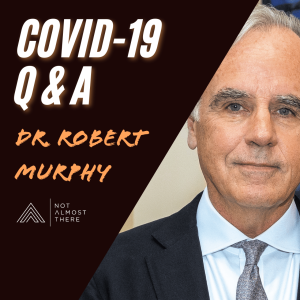
👨⚕️Dr. Robert L. Murphy is the Executive Director for the Institute for Global Health, as well as head of infectious diseases at Northwestern Feinberg School of Medicine. He has been with Northwestern for over 40 years, and when he began his tenure at Northwestern, he saw the first reported AIDs patient in Chicago. He also started one of the first AIDS clinics in Chicago. Dr. Murphy’s main focus on his life’s work has been HIV infection, viral hepatitis, antiviral drug development, and global health research. Dr. Robert Murphy has been the guest expert regarding COVID-19 questions and update on WGN morning news program.
→IN THIS EPISODE…Joe asks Dr. Robert Murphy about his involvement and insights regarding the COVID pandemic. Dr. Murphy has been working with infectious diseases for over 40 years and shares his experiences from being a child during the Polio outbreak to his career starting by treating the first reported AIDs case in Chicago. Dr. Murphy digs into the timeline of COVID: how he was getting his information and therefore had offered bad advice early on, and what we did right as a country to prevent the continued spread of the virus. Dr. Murphy also explains the timeline of the vaccine, how it has been able to get distributed to the public so quickly, and what he believes will be the following steps to irradicate the virus.
🔍 Breakdown with Dr. Robert Murphy:
Chapter 1 (0:00) Joe Introduces Dr. Robert Murphy
Dr. Robert Murphy has been in infectious disease for over 40 years. He is also a regular on the WGN morning news show answering your covid questions.
Chapter 2 (3:03) Was Covid a shock
No, there have been a few epidemics, so having a virus that came out wasn’t a shock. The extent and how it has lasted is what is shocking.
Chapter 3 (5:34) Early information
When covid first emerged, information was funneled slowly. Most communication was coming from the press.
Chapter 5 (8:23) What we got wrong
The public has lost confidence in public health officials, so that disconnect has been devastating for the country.
Chapter 6 (12:18) The vaccine timeline and creation
The COVID vaccine came out extremely quickly. This has caused doubt in some, but Dr. Murphy explains how everything aligned to this groundbreaking vaccine out in record time.
Chapter 7 (23:34) What Dr. Murphy would have done better
Our country is one of the poorer performing countries in regards to how we handled the virus. Dr. Murphy unpacks what we could have done better.
Chapter 8 (29:34) Our unvaccinated population
Unfortunately, due to the poor communication that had been shared during the early stages of COVID, there are information gaps for people who are not getting vaccinated.
Chapter 9 (34:40) Vaccinating our children
Dr. Murphy explains where we are in terms of timeline and getting vaccines to children. As we are studying the effects of the trial patients who received the first vaccine, it gives insights into understanding how kids will respond to the vaccine.
Chapter 10 (39:14) Mask wearing
We have learned a lot about masks through the pandemic. This is one of many coronaviruses, so this will not be the last one we experience.
Chapter 11 (49:00) Covid testing and testing positive after the vaccine
Joe has gotten three covid tests, and all came back negative. He shared his experience with Dr. Murphy. Dr. Murphy also explained data of people getting the vaccine and getting covid.
Chapter 12 (52:55) Prediction for 2 years
It will take 3-5 years for global vaccination. Continued testing and understanding of the genetic breakdown of how the vaccine is working and any boosters that may be needed. Long-term consequences of getting covid also have been alarming so far.
Chapter 13 (58:13) recommended resources
Dr. Murphy shared resources (listed below) for unbiased information regarding the covid virus and the latest updates.
Chapter 14 (1:01:29) Joe Wraps up the episode
Joe thanks Dr. Murphy for being on the episode and share his key takeaways
COVID Resources:
→https://www.cdc.gov/coronavirus/2019-ncov/index.html
→https://covid19.nih.gov/
→https://coronavirus.jhu.edu/
→https://www.who.int/
→https://www.globalhealth.northwestern.edu/covaxcen/index.html
→https://www.doh.wa.gov/emergencies/COVID19
👊 To learn more about Not Almost There by visiting this link
→ Not Almost There http://notalmostthere.com/
Connect with Joe on social here:
→Instagram https://www.instagram.com/joe_chura/
→Facebook https://www.facebook.com/notalmostthere/
→Twitter http://twitter.com/joechura
Monday Jun 07, 2021
Monday Jun 07, 2021
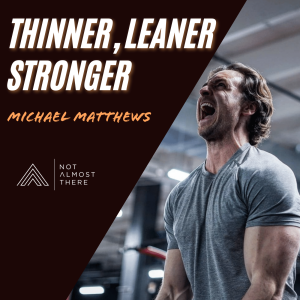
🔥 Mike Matthews is an author, fitness evangelist, podcaster, and entrepreneur. Mike operates with the belief that every person can achieve the body of his or her dreams. He is the bestselling author of the books, “Bigger, Leaner, Stronger”, “Thinner, Leaner, Stronger”, and “The Shredded Chef”, which combined have sold over 1.5 million. Mike is also the host of the Muscle For Life podcast, as well as the founder of Legion Athletics. Mike has used his simple and science-based approaches to fitness and health, building muscle, losing body fat, and gaining strength, to help thousands of people across the world achieve their best bodies ever!
→IN THIS EPISODE...Mike explains the importance of some key factors to ensure great and healthy training; which include getting proper sleep, understanding the food you eat, and the importance of building good habits. He also tells Joe the best supplements to take if you are interested in enhancing your workout regimen AND...AND...The one and only true bio-hack. Get on those shoes or get in the gym while you listen or watch this one. We cover almost everything you need to get started. Keep sending your feedback and look forward to seeing you on the other side.
🔍 Breakdown with Mike Matthews:
Chapter 1 (0:00) Joe Introduces Mike Matthews
Mike is a fitness enthusiast who has answered over 200,000 health questions
Chapter 2 (1:39) Pitfalls getting started on a fitness journey
When people start a trend diet or workout, they can set themselves up for failure with restrictive changes which are not sustainable. Mike offers examples on how to set yourself up for success.
Chapter 3 (14:18) The science behind fitness
There is an intention in Mike’s books to ensure the readers understand every principle. Each chapter also ends with the resources referenced to show each idea has been researched.
Chapter 4 (31:30) Understanding your metabolic rate
20% of your resting metabolic rate (RBR) is used to operate your brain functionality. Mike shares more facts on what your RBR is and how to improve it.
Chapter 5 (39:45) Before bed snacking
Sleeping through the night has been an issue for Mike. He offers some great tips, which include getting some before-bed carbs.
Chapter 6 (51:23) Are there foods to stay away from
Surprisingly, no. The real trick is to listen to what your body tells you. If your body responds badly to a certain food, stay away from it.
Chapter 7 (57:53) Figuring out your macros and best way to track
Figuring out your macros can be difficult, so Mike breaks down the percentages that should work for the average person. Make a food plan that works for you.
Chapter 8 (1:09:33) Exploring calorie deficit and keeping muscle during cardio training
Conditioning is the tool to improve your cardiovascular system, and it’s viable to do this without losing muscle. Mike explains figuring out the calorie deficit you should be working with and how to keep muscle while cardio training.
Chapter 9 (54:21) Importance of sleep
The only true bio-hack is sleep. Sleep has so many benefits, and even more interesting is the negative effects not getting enough sleep has on your health journey.
Chapter 10 (1:05:47) High weight and low reps
If you want to gain muscle and get bigger and stronger, you need to do higher weights and fewer reps. Mike discusses the myth behind more reps getting you more muscles.
Chapter 11 (1:20:26) Supplements are not essential
Surprising comment from Mike, given he runs a supplement brand, but they are not necessary. However, it is important to note, you can absolutely enhance your workout and speed up your fitness goals with the supplements described.
Chapter 12 (1:41:11) Joe Wraps up the episode
Joe thanks Mike for being on the episode and share his key takeaways
Material Referenced in this interview:
→ Bigger, Leaner, Stronger: by Michael Matthews
→Thinner, Leaner, Stronger: by Michael Matthews
→ Beyond Bigger Leaner Stronger: by Michael Matthews
→The Shredded Chef by Michael Matthews
→Legion Supplements (mentioned in the podcast)
📞 Connect with Mike Matthews
→https://www.linkedin.com/company/legion-athletics/
→https://www.instagram.com/muscleforlifefitness/
→https://www.facebook.com/muscleforlifefitness
→https://twitter.com/muscleforlife
👊 To learn more about Not Almost There by visiting this link
→ Not Almost There http://notalmostthere.com/
Connect with Joe on social here:
→Instagram https://www.instagram.com/joe_chura/
→Facebook https://www.facebook.com/notalmostthere/
→Twitter http://twitter.com/joechura
Monday May 31, 2021
Monday May 31, 2021
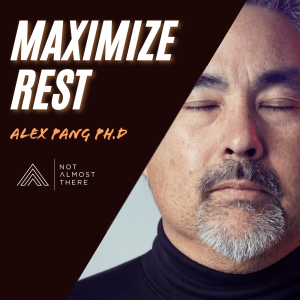
😴 Alex Soojung-Kim Pang’s academic training is in history and sociology of science, a field that blends history, anthropology, and sociology. His research uses ethnography, interviews, historical case studies, and literary analysis (and whatever other tools are lying around) to understand users and their worlds. Alex started his career studying people, technologies, and the worlds they make. Since 2000 he has worked as a technology forecaster and futurist, helping companies understand new technologies and global trends, and their strategic and business implications. His research and consulting opportunities lead Alex to become an author. Most recently he wrote, SHORTER: work better, smarter, and less- which uses design thinking to explain how companies in a variety of industries and countries are moving to 4-day weeks. It’s a sequel to his 2016 book REST: why you get more done when you work less, which explores the hidden role rest plays in the success of super-creative and -productive people. Alex also wrote, THE DISTRACTION ADDICTION, deals with technology, addiction, and distraction.
→IN THIS EPISODE… Joe and Alex take a deep dive into the workweek, employee burnout, and how our perception of productivity needs to be reconstructed. Alex advocates for working shorter, more focused hours and balance that with more ‘serious leisure’ time. Joe and Alex discuss the power of taking breaks from meetings, such as zoom calls, and Alex gives great actionable tips on how to take planned breaks from intense work to enhance your creativity and capacity.
🔍 Breakdown with Alex Soojung-Kim Pang:
Chapter 1 (0:00) Joe Introduces Alex Soojung-Kim Pang
Alex Soojung-Kim Pang is a best-selling author and futurist.
Chapter 2 (1:58) The importance of rest
The “why” behind the importance of rest is the recharge that comes from recovering the energy lost during the day.
Chapter 3 (9:14) Breaking up your day
Setting time for yourself throughout the day for various mental breaks is just as important as meetings throughout your day.
Chapter 4 (22:53) Companies with successful workday models
There are some companies that started adapting a 4-day work model and Alex shares the results.
Chapter 5 (31:50) Catalyst to Rest
While on a work sabbatical, Alex came to the realization that
Chapter 6 (35:52) Creating your company culture
A couple of useful tips to ensure being respectful of people’s time. Make meetings shorter and purposeful, using technology for focus, and better structure of your day.
Chapter 7 (41:35) Lessons from the pandemic
Going to a remote-based model and showing employees flexibility has proven to be successful. We need to keep this model going post covid.
Chapter 8 (46:11) Maximizing your productivity
It isn’t easy to self-identify what time of day is your peak performance time. It’s important to recognize your most focused times are, also it doesn’t have to be limited to one time of day.
Chapter 9 (54:21) The power of sleep
Alex breaks down the cycle of sleep, and the benefits of a nighttime routine to help power down and get the maximum benefit from recharging. He also explains the negative effects of a sleep deficit.
Chapter 10 (1:05:47) Concept of deep play and vacation boundaries
You need to give your creative subconscious time to mull over your ideas without conscious effort. This is also true for your vacation. Set your boundaries so you can enjoy downtime which can then fuel a more focused mind upon your return.
Chapter 11 (1:20:26) Combating distractions with your kids
Thinking about how distracted our kids are due to the number of electronics and screen time that is in front of them.
Chapter 12 (1:24:30) Getting started incorporating rest in your life
There is great value to adding rest boundaries in scale at organizations. Think about how you can model and encourage employees to have higher quality focus time as well as downtime.
Chapter 13 (1:29:55) Wrapping up
Joe concludes the episode and gives you a recap of his highlights from his conversation with Alex.
Material Referenced in this interview:
→SHORTER by Alex Soojung-Kim Pang
→REST by Alex Soojung-Kim Pang
→THE DISTRACTION ADDICTION by Alex Soojung-Kim Pang
→Outliers by Malcolm Gladwell
📞 Connect with Alex Soojung-Kim Pang
→https://www.linkedin.com/in/askpang/
→https://www.instagram.com/askpang/
→https://www.facebook.com/askpang
👊 To learn more about Not Almost There by visiting this link
→ Not Almost There http://notalmostthere.com/
Connect with Joe on social here:
→Instagram https://www.instagram.com/joe_chura/
→Facebook https://www.facebook.com/notalmostthere/
→Twitter http://twitter.com/joechura
Sunday May 23, 2021
Sunday May 23, 2021
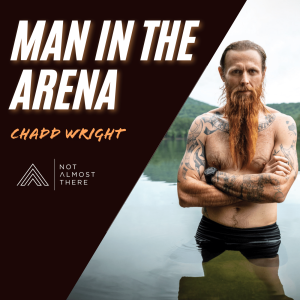
🏔 Chadd Wright is a motivational speaker, business owner, entrepreneur, and retired Navy SEAL who served as a Navy SEAL master training specialist and instructor for 12 years. When he retired in 2019, he also started the 3-OF-7 Project together with his brother, Blake Wright, which is a project dedicated to assisting people in becoming the best version of themselves. Chad also continues to push himself with new goals as an ultramarathoner, with completing and winning events such as The Revenant, Mid State Mile, and Single Track Maniac.
→IN THIS EPISODE… Joe and Chadd talk briefly about Joe’s experience at the proving ground and Chadd's ideas and philosophy around leadership. Chad shares his journey and commitment to becoming a Navy SEAL, his struggles with a silent heart issue, and how his singular focus allowed him to overcome this obstacle. He told Joe about the power of the mind to break barriers and achieve the things you want to manifest in life, how accountability is the sign of a truly great leader, and how to deal with self-doubt.
🔍 Breakdown with Chadd Wright:
Chapter 1 (0:00) Joe Introduces Chadd Wright
Alex is the author of Endure, and publishes many articles in Runner’s world and Outside
Chapter 2 (1:20) Positive and negative leadership inspiration
Everything Chadd has created with his 3of7 company has been fed from what he learned from being a Navy Seal. He credits so much of what he learned from being a seal instructor and feels he has a master's degree in forging warriors.
Chapter 3 (5:48) An unachievable lesson
In BUDs Chadd experienced a setback in a particular exercise of extreme endurance, but it was because his instructors had set an unrealistic goal. What he learned from that experience was something he implements today.
Chapter 4 (14:25) Failure as a leader
We all experience failure, and although it may seem more glaring as a leader, the best thing you can do is take ownership. Own the mistake, learn from it, and do better.
Chapter 5 (19:30) Becoming a navy seal
Chadd set a goal of becoming a navy seal and wouldn’t let anything stand in his way. Not even a rare heart condition that almost took him out of the running to be on the seal's team.
Chapter 6 (34:59) Proving oneself to others
Proving himself to family, friends, and any naysayers around Chadd wasn’t his top driver, it was his internal drive that pushed him to achieve his goals, from becoming a Navy Seal to his ultramarathon experiences.
Chapter 7 (42:10) Finding motivation to keep pushing yourself
Motivation comes from Chadd’s brothers and sisters who have contributed in some way to the 3 fo 7 project.
Chapter 8 (47:52) Putting in the miles
Chadd doesn’t just put out goals without setting them for himself. He set goals such as training for the mid-state mile, which is his principles put into practice.
Chapter 9 (51:43) Your tongue is your rudder
The minute you allow yourself to speak words of self-doubt or insecurity, you allow the idea of giving up to set in. The power of a positive mindset and positive self-talk is crucial to your success.
Chapter 10 (58:41) The day after a major achievement
After you have trained and prepared for a race or event, the following day can be depressing. The letdown, if you don’t prepare for it can take you by surprise. Chadd allows himself 1-2 days to feel sad. He knows it will come, and he plans for it, and allows it to have its place.
Chapter 11 (1:05:55) Being in a flow state
This life is a gift, and the best gift we can give ourselves is to be present and to challenge ourselves to the best we can be. To experience the good and the bad, and to learn and grow from each experience.
Chapter 12 (1:21:03) Joe wraps up the episode
Joe concludes the episode and recaps highlights from his time with Chadd.
Material Referenced in this interview:
→https://3of7project.com/
📞 Connect with Chadd Wright
→https://www.facebook.com/3of7project
→https://www.instagram.com/chadwright278/
👊 To learn more about Not Almost There by visiting this link
→ Not Almost There http://notalmostthere.com/
Connect with Joe on social here:
→Instagram https://www.instagram.com/joe_chura/
→Facebook https://www.facebook.com/notalmostthere/
→Twitter http://twitter.com/joechura
Monday May 17, 2021
Monday May 17, 2021
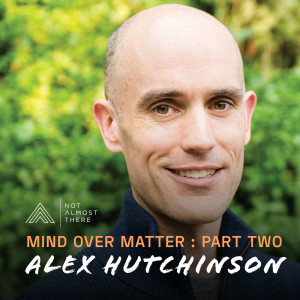
🏃♂️ Alex Hutchinson is an Author with a Master’s degree in journalism from Columbia University, a physicist with a Ph.D. from the University of Cambridge. Aside from academia, he is also a professional athlete with credentials as a two-time finalist in the 1,500 meters at the Canadian Olympic Trials. Today he writes about the science of endurance for Runner’s World and Outside, while frequently contributing to little-known publications like the New York Times, The New Yorker, and Toronto’s Globe and Mail. FiveThirtyEight recently named him one of their “favorite running science geeks” and he was also one of only two reporters granted access to cover Breaking2 — Nike’s top-secret training project to break the two-hour marathon barrier.
→IN THIS EPISODE… Joe and Alex break down the science behind VO2 max. Alex explains what it is, how to figure out your numbers, and what you should use this metric for. They also discuss fitness; what the optimal exercise frequency is, how to gain muscle back after you lose it, and the importance of strength training. Alex shares his favorite gadgets to help track your progress, and his most important tips you can start using today.
🔍 Breakdown with Alex Hutchinson:
Chapter 1 (0:00) Joe Re-Introduces Alex Hutchinson
Alex is the author of Endure, and publishes many articles in Runner’s world and Outside
Chapter 2 (1:19) Breaking down VO2 max
It’s the volume of oxygen, the fastest rate at which you can take oxygen and give it to your muscles. Alex explains how this varies depending on your level of fitness and why this is important.
Chapter 3 (6:32) VO2 Max and how you should apply it
Remember VO2 max is important to understand your physical well-being. Even if you’re not an athlete, improving your Vo2 max can potentially improve your overall health. Low levels of cardiovascular fitness correlate with an increased risk of heart disease.
Chapter 4 (8:12) How to improve your VO2 Max
You can increase your Vo2 max in two ways: by increasing the amount of blood your heart can pump and by increasing how much oxygen your muscles can take up.
Chapter 5 (21:09) Going back, what would you do differently
Alex looks back on his career and thinks about what he might change or do differently. The purest answer is no. Alex explains that although he knows so much more now about the physiological side of training, he feels proud of the way he handled his career.
Chapter 6 (24:12) Minimal amount of exercise to get maximum results
30 minutes of moderate exercise 5 days a week is what is advised. Although, even 10 minutes moves the needle.
Chapter 7 (29:37) Losing muscle quickly when you stop exercising
If you are sitting all day or not moving at all, you lose muscle extremely quickly. Scary if you are sitting at a desk all day. The good news is that it is easier to regain that muscle, and Alex explains why.
Chapter 8 (35:56) Gadgets or methods that help your training
The most important method is focusing on your mental strength. The extras are just not proven to be any more effective than your own training routine.
Chapter 9 (40:05) Nike Vapor Fly
Alex was one of 2 journalists to be able to report on the Nike Vapor Fly, and almost breaking the world record. Nothing in the shoe was new, but it was just the perfect combination to create faster run times.
Chapter 10 (54:46) Joe wraps up Part 2
Joe closes the episode by asking if Alex would expand the book, what would the new chapters be.
Material Referenced in this interview:
→Endure by Alex Hutchinson
→The Genius of Athletes by Noel Brick and Scott Douglas
📞 Connect with Alex Hutchinson
→https://www.linkedin.com/in/alexhutchinson
→https://www.facebook.com/sweatscience
→https://www.instagram.com/sweat_science/
👊 To learn more about Not Almost There by visiting this link
→ Not Almost There http://notalmostthere.com/
Connect with Joe on social here:
→Instagram https://www.instagram.com/joe_chura/
→Facebook https://www.facebook.com/notalmostthere/
→Twitter http://twitter.com/joechura
Monday May 10, 2021
Monday May 10, 2021
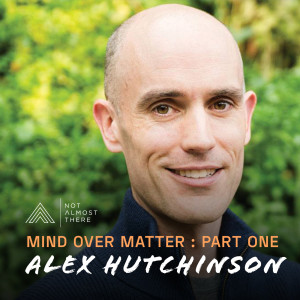
Alex Hutchinson is a NY Times Best Selling Author with a Master’s degree in journalism from Columbia University, a physicist with a Ph.D. from the University of Cambridge. Aside from academia, he is also a professional athlete with credentials as a two-time finalist in the 1,500 meters at the Canadian Olympic Trials. Today he writes about the science of endurance for Runner’s World and Outside, while frequently contributing to little-known publications like the New York Times, The New Yorker, and Toronto’s Globe and Mail. FiveThirtyEight recently named him one of their “favorite running science geeks” and he was also one of only two reporters granted access to cover Nike’s top-secret training project to break the two-hour marathon barrier.
→IN THIS EPISODE… Joe and Alex break down the science behind physical exertion and the importance of mental fortitude. Alex tells the story of his “aha moment” during a meaningless track meet that catapulted his running career and seeded his interest in the power of the mind. Alex explains what this all means for the everyday person: optimal exercise volume for maintaining health, how to avoid acute and chronic injuries, and how visualization and positive self-talk are cornerstones to performing at your best.
🔍 Breakdown with Alex Hutchinson:
Chapter 1 (0:00) Joe Introduces Alex Hutchinson
Alex is the author of Endure, and publishes many articles in Runner’s world and Outside
Chapter 2 (1:43) The inspiration for writing Endure
While running in an inconsequential race, Alex had an experience where he had smashed his PR, and the only element that was different was his frame of mind. This event started a trajectory of research that led him to write a book about the impact of the mind on the body.
Chapter 3 (5:50) Finding research to substantiate mind over matter ideal
Not just relying on anecdotal experience, Alex also explains the research he did on athletes’ mindset and how it affects their performance.
Chapter 4 (12:21) Variations in mental fortitude
Why can some people squeeze more out of the lemon than others? Looking at why some people are able to break free of their mental limitations
Chapter 5 (22:29) Positive self-talk
Affirmations are not a new concept, but the research of just how much positive self-talk affects performance is surprising.
Chapter 6 (30:26) Negative self-talk
The minute negativity starts creeping in, it can often be an insurmountable obstacle. Joe and Alex discuss why this happens and how to avoid this pitfall.
Chapter 7 (38:18) Visualization and micro-goals
From a young age, Joe and Alex both have had personal experiences of visualization that helped mold how they view goal setting. Alex gives great advice on how to break up a large goal into smaller achievements.
Chapter 8 (48:07) Setting goals for purpose-driven training
Joe is doing a Spartan Ultra race, and how it shapes and drives his workouts. Having a goal to work toward can help motivate and create accountability around your exercise.
Chapter 9 (54:46) Joe wraps up Part 1
Joe and Alex continue their conversation next week and dig into VO2 max.
Material Referenced in this interview:
→Endure by Alex Hutchinson
→The Genius of Athletes by Noel Brick and Scott Douglas
📞 Connect with Alex Hutchinson
→https://www.linkedin.com/in/alexhutchinson
→https://www.facebook.com/sweatscience
→https://www.instagram.com/sweat_science/
👊 To learn more about Not Almost There by visiting this link
→ Not Almost There http://notalmostthere.com/
Connect with Joe on social here:
→Instagram https://www.instagram.com/joe_chura/
→Facebook https://www.facebook.com/notalmostthere/
→Twitter http://twitter.com/joechura

Sunday May 02, 2021
Sunday May 02, 2021
Suzie Yorke launched a rocket ship food start-up brand Love Good Fats that just exceeded $100mil in Revenue and is just over 3 years! 🚀🚀🚀🚀 A proud mom, partner 🏳️🌈, former Marketing CPG Executive and now, first-time entrepreneur (at age 50!) on a fierce mission to spread the word that fat is back and sugar it out. 11x Ironman athlete, cyclist, marathon runner. Award winner: 2020 RBC Canadian Women Entrepreneur Award and 2019 Top 100 Most Powerful Women Award. Suzie’s brand Mission is to play a key role in getting North Americans to eat more healthy fats, less sugar, feel great, and living healthier lives. Finally, fat is back!
→IN THIS EPISODE… Joe discusses with Suzie Yorke her impressive launch of a nutrition bar company, Love Good Fats, at the age of 50. Being a startup in a food space is not easy, but with Suzie’s impressive marketing background, she explains how she was able to acquire funding and get into big box stores to start the upward trajectory of her nutrition bar business. She tells Joe about the fallacies of a high-fat diet, as well as the positive effects on her physical health and her energy level once she ditched her previous misconceptions and reintroduced good fats.
🔍 Breakdown with Suzie Yorke:
Chapter 1 (1:30) Joe Introduces Suzie Yorke
Suzie is an entrepreneur in Canada that is exploding into the health bar scene.
Chapter 2 (1:49) The creation of Love Good Fats
While traveling in her previous CMO role, Suzie discovered a breakthrough in her health. She realized the misinformation she had been told is that all fats are bad.
Chapter 3 (5:01) Starting a company at the age of 50
Once Stacie had her moment identifying a gap in the market for a healthy fat bar, she starting getting angel investors and working to get her bar up and running.
Chapter 4 (10:23) Sales blew away expectations
Love Good Fats' proof of concept was two bar flavors, and those bars quickly flew off the shelves, so they immediately created two new flavors and things haven’t slowed down since.
Chapter 5 (11:39) Getting into big box stores
Whole Foods was the first big-box store to pick up her product, and it did not take long to get into more stores once the word was out about the sales she was doing.
Chapter 6 (17:11) How to know if my product will last
There are market reports that come out, but there are also some key identifiers. Suzie explained how she was able to identify her brand as a stable force in the nutrition bar space.
Chapter 7 (22:23) My “I made it” moment
It's hard to say out loud at any given time, “I made it”, but Suzie recounts the moment she had where she felt her company had hit a major milestone.
Chapter 8 (27:46) Entrepreneur state of mind
Being an entrepreneur comes with its own set of challenges. It may seem like being your own boss is the ultimate goal, but what often isn’t spoken of is the weight of supporting your employees and other stresses that come along with it.
Chapter 9 (36:20) Not feeling healthy
Doing everything Suzie thought she should be doing; low fat, low salt, and eating greens. She still had stomach issues and high blood pressure. What’s the problem?
Chapter 10 (44:01) Cutting out Sugar and good nutrition
Suzie cut out sugar and focused on clean eating with fruits, vegetables, and healthy fats.
Chapter 11 (49:09) Common mistakes of high-fat diet
A high-fat diet doesn’t mean an abundance of saturated fats. It’s important when you are adding fats to your daily nutrition you understand the kind of fat you are consuming. You should always track/monitor your progress and consult your physician.
Chapter 12 (54:52) Balancing workout with your workday
You have to make it a priority and set a focus and intention on your day. Being an entrepreneur can absorb so much more of your time and focus, so carving out time is essential.
Chapter 13 (56:30) One take away recommendation
Just cut sugar. There is so much sugar that is hidden in foods and ingredients, so limit or cut your sugar consumption as much as possible.
Chapter 14 (59:16) Where to find Love Good Fats
First, a recommendation put the bars in the fridge and the freezer. You can find the product in Whole Foods, Walmart, and some other chain stores. Connect with Suzie on LinkedIn.
Chapter 15 (1:00:00) Joe wraps up the episode
Material Referenced in this interview:
→The Big Fat Surprise by Nina Teicholz
📞 Connect with Suzie Yorke
→https://www.linkedin.com/in/suzieyorke/
→https://www.facebook.com/suzieyorke/
→https://www.instagram.com/suzieyorke/
👊 To learn more about Not Almost There by visiting this link
→ Not Almost There http://notalmostthere.com/
Connect with Joe on social here:
→Instagram https://www.instagram.com/joe_chura/
→Facebook https://www.facebook.com/notalmostthere/
→Twitter http://twitter.com/joechura
Sunday Apr 25, 2021
Sunday Apr 25, 2021
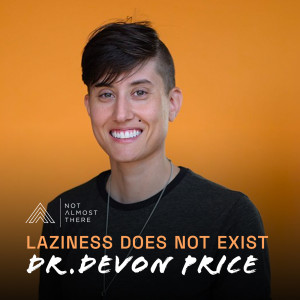
📄 Dr. Devon Price Dr. Devon Price is a social psychologist, writer, activist, and professor at Loyola University of Chicago’s School of Continuing and Professional Studies. Price’s work has appeared in numerous publications such as Vox, Slate, The Rumpus, NPR, and HuffPost and has been featured on the front page of Medium innumerable times. Their first book, LAZINESS DOES NOT EXIST, was published in January 2021 to critical acclaim.
→IN THIS EPISODE… In this episode, Joe discusses with Dr. Devon Price the laziness paradox and if laziness, in fact, exists. Dr. Devon gives Joe actionable tips on how to feel balanced in your day with pockets of time for yourself and your mental health, so when you are meant to be focused, you are able to do so without fear of burnout.
🔍 Breakdown with Dr. Devon Price:
Chapter 1 (0:00) Joe Introduces Dr. Devon Price
Mike Vardy is a productivity specialist and is going to share tips and ideas during the interview.
Chapter 2 (2:11) Common misconceptions about laziness
People often identify themselves as lazy and do not give themselves enough credit for what they are doing. It’s not about willpower; it about prioritizing.
Chapter 3 (4:22) The fine line between too lazy and not lazy enough
We define a lot of situations as lazy, but as a culture, we overuse that word.
Chapter 4 (5:58) Working harder versus working smarter
Dr. Devon recognizes some work culture norms are not what works for someone’s accomplishments. Being the last one to leave the office is not essential; making positive outcomes for your organization is.
Chapter 5 (9:18) Notification and alerts on your smart devices
One particular workspace app, slack, has been positive and damaging to the workplace atmosphere. Dr. Devon advises on how to set boundaries within that space.
Chapter 6 (16:29) Working can affect your health
How Dr. Devon became interested in the topic of laziness and work expectations, is when they themselves suffered adverse health effects from the amount of stress and pressure they expected out of themselves.
Chapter 7 (22:23) Living to someone else’s expectations
Dr. Devon discusses “upward social comparison.” They explain how not to let others be your benchmark to your detriment.
Chapter 8 (27:46) Learning something new
When you can give yourself a new focus, it can help alleviate stress. You take away expectations, as this is something new you are trying, so you can remove the idea of being perfect.
Chapter 9 (36:20) Creating a filter against social media
Dr. Devon gives examples of their boundaries they set in order to push against the pressure of online content. They also explain tips that will help buffer the stress that comes from a constant stream of notifications.
Chapter 10 (40:37) Tips for feeling overwhelmed by the news
Don’t mistake information for power. Too much information can flood our nervous system, so find ways to slow down. Dr. Devon also explains the power of blocking.
Chapter 11 (49:02) The positive outcomes from a “push” from a device
Is a Fitbit or Apple watch a positive tool or negative? The benefits and the negative aspects of having a reminder at all times.
Chapter 12 (52:22) Creating routines as a parent
As a parent, there is guilt around “screen time” or allowing them to have a day without an agenda. There is a wonderful aspect of showing your children realistic expectations and allow to have
Chapter 13 (59:24) The overall lesson boiled down
Dr. Devon provides some actionable items on how to take control of your day and your overall happiness and well-being.
Chapter 14 (1:01:12) Helpful resources
In Laziness Does Not Exist, there are many resources from books to tools online that help you in your day-to-day. Dr. Devon shares some of their top recommendations.
Chapter 15 (1:03:37) Where you can connect with Dr. Devon and wrap-up
Dr. Devon shares how you can connect with them and Joe wraps up the episode.
Material Referenced in this interview:
→Laziness Does Not Exist by Dr. Devon Price
→Sadblock, filter extension on Google Chrome
→Values Clarification Exercise by therapistaid.com
→Reflective writing exercises - Google for resources
📞 Connect with Dr. Devon Price
→https://www.linkedin.com/in/drdevonprice/
→https://www.facebook.com/drdevonprice/
→https://www.instagram.com/drdevonprice/
→https://devonprice.medium.com/
👊 To learn more about Not Almost There by visiting this link
→ Not Almost There http://notalmostthere.com/
Connect with Joe on social here:
→Instagram https://www.instagram.com/joe_chura/
→Facebook https://www.facebook.com/notalmostthere/
→Twitter http://twitter.com/joechura
Monday Apr 19, 2021
Monday Apr 19, 2021
✅Mike Vardy is an author, speaker, and productivity and time management strategist (or 'productivityist') based out of Victoria, BC, Canada. He is the author of "The Front Nine: How to Start the Year You Want Anytime You Want," and has also self-published several eBooks, most recently "The Productivityist Playbook." Mike has been performing for 12 years -- and has given talks on productivity, time, and task management at TEDxVictoria, Social Media Camp, New Media Expo, and South by Southwest. He has also facilitated workshops related to tasks, time, projects, and goal management. Mike has also produced and hosted several podcasts over the years, and currently hosts The Productivityist Podcast, a podcast that features insights and conversations surrounding productivity and workflow.
→IN THIS EPISODE… In this episode, Joe discusses with Mike Vardy the concept of productivity. Mike gives tips, tools, tactics, and tricks that are designed to help you take your time management, goals, and to-do lists to a new level of effectiveness. Whether you are looking to maximize your ROI at work or at home, you will get many actionables to start these changes today.
🔍 Breakdown with Mike Vardy:
Chapter 1 (0:00) Joe Introduces Mike Vardy
Mike Vardy is a productivity specialist and is going to share tips and ideas during the interview.
Chapter 2 (1:41) What is the model of productivity
We are not designed to multi-task, and we forget that machines are designed to handle multiple processes, but humans are not.
Chapter 3 (7:46) Finding balance between internal communication
Mike discusses the purpose of slack and how to organize your internal communication with external communication.
Chapter 4 (14:07) Tips for project management tools
Most of the tools are connected to your email, so when you send an email it will automatically add to your project.
Chapter 5 (16:36) People playing defense
If you are checking email to be told what to do, then you don’t have the right plan in place. You run the risk of email telling you what to do. The best practice is to plan your day the night before.
Chapter 6 (23:16) How to get back on track
Mike compares the analogy with fighting fires all day, which implies a haphazard manner, with actual firemen who are very controlled with how they put out fires.
Chapter 7 (36:17) Setting the right schedule
Mike works out at night, Joe works out in the morning. Mike explains how to identify when you are the most productive.
Chapter 8 (41:31) Procrastination and how to avoid it
Focus on the elements of your project and make measured steps to work on the large project in small doses.
Chapter 9 (45:45) Theme your days
If you set a tone for each day it helps to organize and set perimeters around your day so you don’t get sidetracked.
Chapter 10 (52:05) Getting started
The first question asked is, are you a calendar person or a to-do list person. There are 5 modes from there Mike goes into that help your productivity goals.
Chapter 11 (58:18) Time blocking and horizontal theming
Two types of time organization are time blocking and horizontal theming. Mike explains the differences between the two, and his preference for horizontal theming for habitual practice.
Chapter 12 (1:15:10) Tips on habit tracking app
Mike reviews some idea on Evernote and other various apps, including Hindsight, as recommended apps that help with habit tracking
Chapter 13 (1:22:33) The power of streaks
Nothing is more encouraging than getting your new habit started. Start your new habit and building upon it to keep the momentum going.
Chapter 14 (1:25:57) What’s one thing to start tomorrow
Put verbs in front of every task you write down. Every task is an action item.
Chapter 15 (1:30:09) Some book recommendations
Mike has some great book recommendations, which are listed below.
Chapter 16 (1:32:33) Find out more about Mike
You can connect with Mike through any of his social media linked below, or through his website.
Chapter 17 (1:34:01) In closing
Joe closes out the episode and reminds the audience, you, me, we are not almost there.
Material Referenced in this interview:
→A World Without Email by Cal Newport
→Creative Quest by Quest Love
→The Playbook by Mike Vardy
→30 Days of Excellence with Jesse Itzler
→The 5 Categories of Modes by Mike Vardy
→Obsidian Note tracking app
→How to live on 24hours a day by Arnold Bennet
→Indestractable by Nir Eyal
→The gift of time by Mike Vardy
→The power of When by Michael Breus
→The Productivityist Podcast with Mike Vardy
📞 Connect with Mike
→https://www.linkedin.com/in/mikevardy/
→https://www.facebook.com/themikevardy
→https://www.instagram.com/productivityist/
→https://www.youtube.com/user/Productivityist
👊 To learn more about Not Almost There by visiting this link
→ Not Almost There http://notalmostthere.com/
Connect with Joe on social here:
→Instagram https://www.instagram.com/joe_chura/
→Facebook https://www.facebook.com/notalmostthere/
→Twitter http://twitter.com/joechura

Sunday Apr 11, 2021
Sunday Apr 11, 2021
Alison Canavan is a UCLA-trained Mindfulness Facilitator from The Semel Institute of Neuroscience and Human Behaviour. She runs a successful private practice as a Health and Wellness coach and delivers motivational talks on health and wellbeing, all over the world, specializing in behavior change, mental health, addiction, and improving your mindset. Alison was a successful international model for nearly two decades and in recent years has devoted her time to her greatest passion: the achievement of true health and wellbeing for herself and others. Alison is passionate about human potential and helping people to reach theirs; she attained a graduate distinction in Nutrition and Health Coaching from Irish Institute of Nutrition and Health, Advanced Diploma in Diet and Nutrition therapeutics, Raw Foods Mastery level 3 from The Life Change Health Institute. In her work, she shares tools and training that help people connect, go within, and create lasting change through intuition and everyday small behavioral changes.
→IN THIS EPISODE… Joe and Alison talk about her journey to sobriety. As Ireland’s first Super Model Alison found herself being engulfed in a toxic lifestyle. Her turning point was motherhood, and her son James brought her the motivation to start seeking help and health. Alison shares great tips and exercises to become a more mindful person to live a life of gratitude.
🔍 Breakdown with Alison Canavan:
Chapter 1 (0:00) Introducing Alison Canavan
Joe introduces Alison, and sets up the episode.
Chapter 2 (3:15) Defining Moment
Alison credits the birth of her son as the catalyst for her getting sober and focusing on her health.
Chapter 3 (13:26) From model to mindfulness expert
Alison shares her journey as Ireland’s first supermodel, and how she started down a road of self-destructive behavior with alcohol. She explains how the birth of her son helped shift her focus to mindfulness and living a holistic lifestyle.
Chapter 4 (17:08) More alcohol equals less productivity
Alcohol or any harmful substance can typically cause negative side effects that last 3 times longer than the moment you do them.
Chapter 5 (24:36) Power of Streaks
Starting a new goal can be difficult, especially when it is breaking a bad habit, so a great tip is to focus on creating a streak. You will notice a shift after you are successful 5 or more days in a row.
Chapter 6 (25:28) How to find a good mentor
Throughout Alison’s journey, she credits a lot of her good habits and the ability to overcome her addiction to alcohol through teachers she has met along the way.
Chapter 7 (33:35) Creating consistency and routine
A great analogy for an absence of consistency; weeds (bad habits) invading your garden(your life/goals). Joe shares this and some great tips in establishing a routine.
Chapter 8 (39:30) Mediation in schools
Why aren’t we teaching our kids mental exercises as well as physical exercise? This is a topic Joe discussed with Nelson Delis in a previous episode as well.
Chapter 9 (44:55) Power tip about consistency
Joe shares a power tip he learned from a book, Tiny Habits. It is never too late to make changes in your life.
Chapter 10 (52:08) Enjoy the process and trust the journey
Joe and Alison discuss how to get yourself to a place of happiness and enjoy the moment of time you are currently in.
Chapter 11 (1:05:54) Where hearts unite
Right now, Alison is working with her brother to develop holistic supplements. She is also a life coach and can help with mindfulness and meditation.
Chapter 12 (1:11:15) Speed round questions
Learn about Alison’s favorite books to reread, and her non-important thing to do.
Chapter 13 (1:16:09) In Closing
Joe wraps up the episode and encourages you to remember: you, me, we are not almost there.
Material Referenced in this interview:
→Minding Mum by Alison Canavan
→Virgin River (Netflix Series)
→Tiny Habits by BJ Fogg, PhD
📞 Connect with Alison
→https://www.whereheartsunite.com/
→https://twitter.com/alicanavan
→https://linktr.ee/alisoncanavanwellness
👊 To learn more about Not Almost There by visiting this link
→ Not Almost There http://notalmostthere.com/
Connect with Joe on social here:
→Instagram https://www.instagram.com/joe_chura/
→Facebook https://www.facebook.com/notalmostthere/
→Twitter http://twitter.com/joechura